ROAS, return on ad spend, is the number most performance reports lead with. The idea is simple: the purchase value your ads are credited with, divided by what you spent on them. A ROAS of 4× means every ₹1 of ad spend is credited with ₹4 of purchases.
Simple numbers are easy to misread. Here is how we read ours, and how we think anyone should read theirs.
What ROAS actually measures
ROAS sets revenue credited to ads against ad spend. Both halves deserve a second look.
- Revenue, not profit. ROAS counts purchase value. It says nothing about your margin, product cost, shipping, discounts or returns. The same 3× can be healthy for one brand and a loss for another.
- Credited, not caused. An ad platform credits purchases to ads according to its attribution settings, such as how many days after a click or a view a purchase still counts. Some of those buyers might have bought anyway.
- Media spend only. The spend in the formula is what went to the platform. Shoots, creative production and agency fees usually sit outside it.
Four questions to ask before you trust one
- Over what spend? A high ROAS on a tiny budget is a test result. The same ROAS on a real budget is a business.
- Over what period? One good week is a spike. A lifetime view shows whether it held.
- Across how many ads? One winning ad can be luck. Hundreds of ads tested tell you the system works.
- From which account? A figure blended from many accounts can hide the weak ones. One named account is easier to check.
Our number, with its context
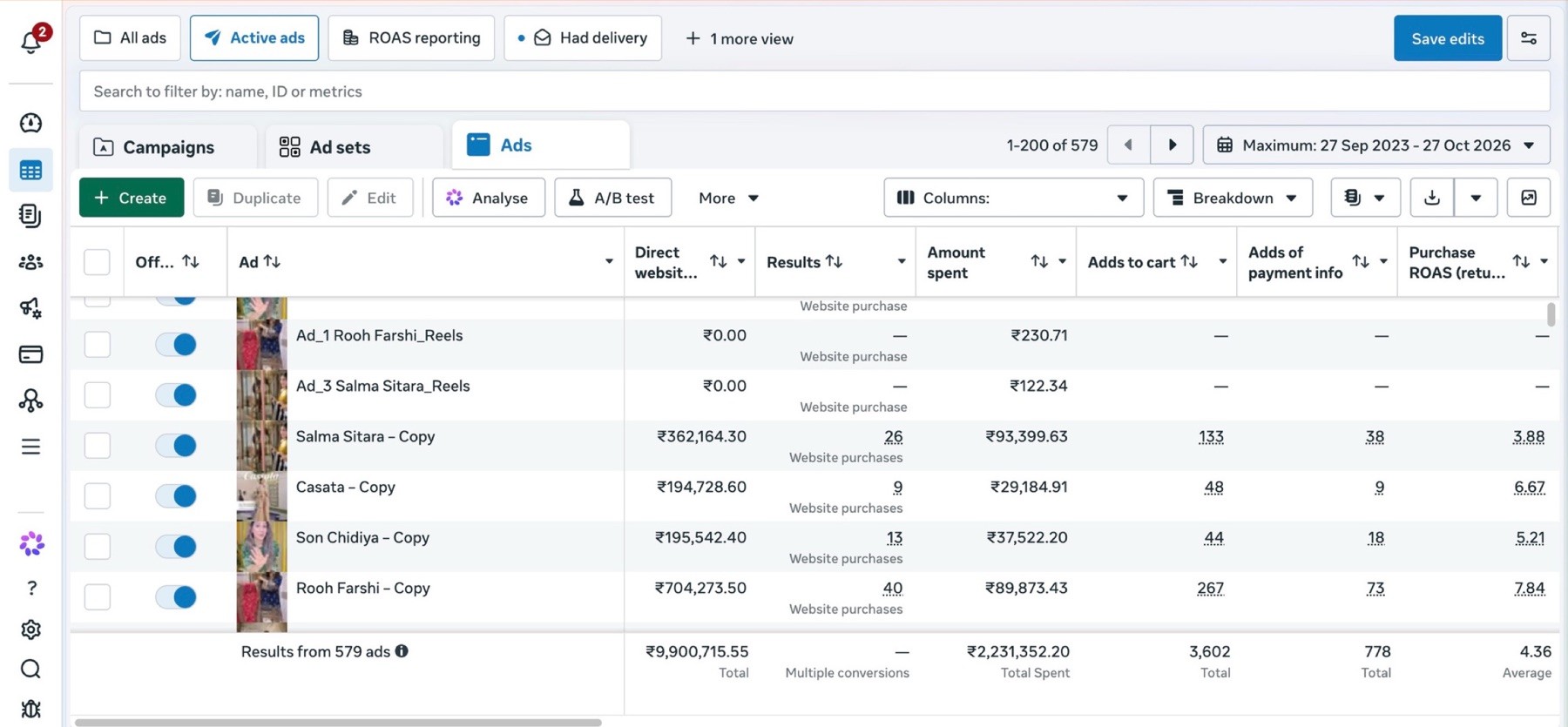
On our home page we quote one figure for performance marketing. Here it is with everything that should travel with it.
These figures come from one Meta Ads account, in its lifetime view. In plain words: every ₹1 spent came back as ₹4.36 in purchases. We put the spend and the number of ads tested beside it so you can judge the result for yourself.
How we get there
Meta Ads, run end to end: pixel and tracking, audiences, creative testing and scaling. We test widely, cut what doesn’t sell, and move the budget behind what does. The 579 ads in that account are what “test widely” looks like in practice.
Creative earns the click; discipline earns the return. That is why our shoots and our ad accounts sit with the same team. See the performance work, or read how 75 creators launched a brand-new category.
A short checklist for your next report
- Ask for spend, purchase value and ROAS side by side.
- Ask which attribution setting and date range the numbers use.
- Work out your break-even ROAS: the point where ad-credited revenue covers product cost, delivery and the ad spend itself. Compare against that, not against someone else’s number.
- Ask what was tested, what was cut and where the budget moved.